Edward S. Curtis
1868 – 1952
The photographer behind The North American Indian, an ambitious and contested early-20th-century record of Native nations
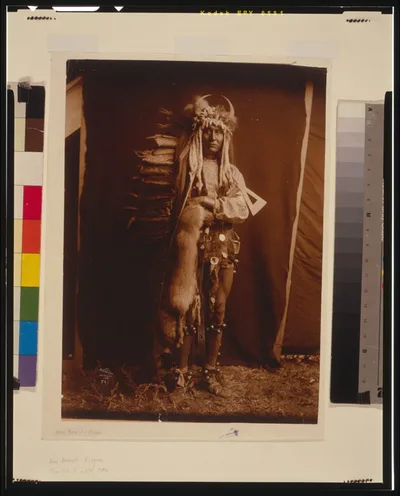
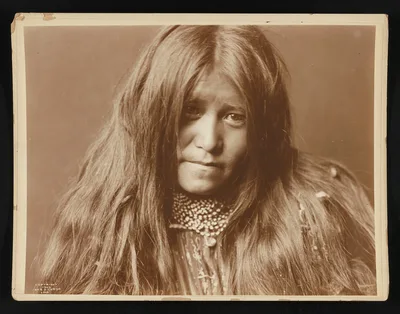
Edward S. Curtis (1868-1952) was an American photographer best known for The North American Indian, a thirty-year project to document the peoples of more than eighty Native nations across the United States, Alaska, and Canada. Trained as a portrait photographer in Seattle, he undertook the work in the Pictorialist style of his era, producing soft-focus portraits, landscapes, and staged scenes published between 1907 and 1930 as twenty volumes of text with twenty accompanying portfolios of photogravures. The project was funded largely by financier J. Pierpont Morgan and introduced by a foreword from President Theodore Roosevelt. Curtis's images are widely admired and equally widely criticized for their staging, retouching, and the romantic "vanishing race" ideology that shaped them.
A Career in Images
![[Edward Curtis, head-and-shoulders portrait, facing slightly left], 1879](/static/images/2022676859_thumb.webp)
![[Calico - Oglala, head-and-shoulders portrait, facing right], 1890](/static/images/96513709_thumb.webp)
![[Chief's house, deserted village], 1899](/static/images/2018662085_thumb.webp)
"The information that is to be gathered ... respecting the mode of life of one of the great races of mankind, must be collected at once or the opportunity will be lost."
— Edward S. Curtis